
The mechanism: Willow isn't a bet on oil prices — it's a bet on one federal agency's pen. ConocoPhillips has held leases in the National Petroleum Reserve-Alaska (NPR-A) since the 1990s, but the reserve is federal land, and the Bureau of Land Management decides what gets built on it. In March 2023, Interior's Record of Decision approved only three of ConocoPhillips' five proposed drill pads. In June 2025, the Ninth Circuit ruled BLM had violated NEPA in approving even that scope — but let the project keep moving without vacatur. Then in November 2025, BLM formally rescinded the Biden-era NPR-A rule that had walled off nearly half the reserve from leasing, reverting to the permissive 1977 framework, with officials now teeing up approval for the two previously-denied pads. Same barrels in the ground, same oil price — but the booked reserve, capex timeline, and multi-decade production profile swing entirely on which administration's BLM is holding the pen. That's the trade: Interior Department policy, not WTI, is the re-rating catalyst.
Willow Isn't an Oil Play. It's an Interior Department Play.
ConocoPhillips' Willow reserve booking doesn't move on crude prices — it moves on which Bureau of Land Management Record of Decision is currently in force.
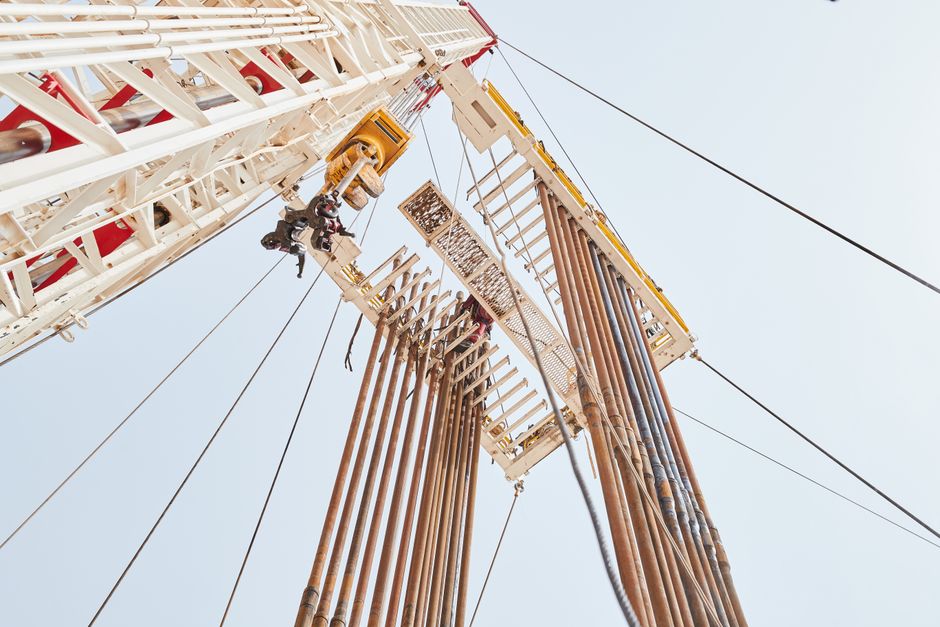
Same barrels, same oil price — the booked reserve swings entirely on which administration's BLM is holding the pen.
Who cashes in:
- COP — Willow is a single-company story. At full five-pad buildout, this is a ~180,000 bbl/day, 30-year North Slope asset — the kind of long-duration reserve booking that moves COP's Alaska segment valuation independent of near-term crude prices. Every additional approved pad is a direct addition to proved reserves and forward capex guidance.
- HAL and SLB — Arctic development means specialized cold-weather drilling, ice-road logistics, and horizontal well completions on the North Slope. A green light on the remaining pads is incremental oilfield-services backlog neither company gets if Willow stays capped or stalls in court again.
- WMB and KMI — expanded North Slope production needs takeaway infrastructure (gathering, processing, pipeline capacity) to move barrels to TAPS. Midstream operators with Alaska or West Coast refining-linked exposure benefit at the margin from higher throughput, though this is a secondary, not primary, read-through.
Who is exposed:
- COP — the same concentration cuts both ways. Adverse Interior action (a new NEPA remand, a reinstated leasing ban, a hostile ROD under a future administration) directly impairs booked reserves and stranded capex on pads already engineered. Willow is a binary regulatory asset wrapped in an oil company.
- XOM and CVX — not direct Willow investors at this scale, but both hold Alaska/Arctic-adjacent interests and lease positions; a durable pro-leasing NPR-A stance from Interior lowers the political and permitting risk premium on any future Arctic exploration they'd consider, while a reversal reinforces the "Arctic federal land is uninvestable" consensus that has kept majors on the sidelines for a decade.
The play: Track the BLM press office and Federal Register, not the oil futures screen — the next ROD amendment or NPR-A rule notice is the actual re-rating event for COP's Alaska book. What to watch: further BLM action on the two previously-denied pads, any new Ninth Circuit remand proceedings, and whether Interior's November 2025 rule rescission survives its own litigation challenge.
Source: original report ↗
Free: catalyst alerts, straight to your inbox.
Get the White House orders, federal contracts, and FDA decisions that move money — with who cashes in — free. Unsubscribe in one click.
Free · weekly · unsubscribe anytime. Privacy.
Stay three moves ahead of every practice in your market.
Knowing it happened is table stakes. Money Racket Pro hands you the play — what each move means for your margins, your license, and your patients, and exactly what to do about it — in a two-minute brief, twice a week. The owners who read it never get blindsided.
Get the edge · $40/moJoin the owners who run ahead of the industry. Cancel anytime, one click.