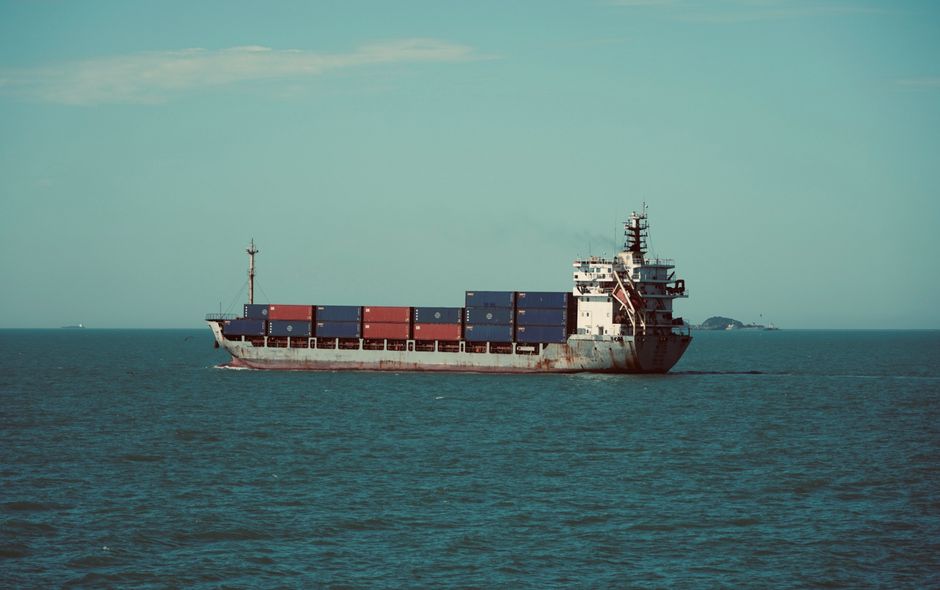
Washington killed the $800 duty-free import loophole that powered Shein and Temu — and the sellers scrambling to bulk-import-then-warehouse instead are handing their freight bill straight to Amazon Global Logistics.
The mechanism. For years, Section 321 of the Tariff Act let any package worth $800 or less enter the U.S. duty-free with minimal customs scrutiny — the loophole that let Shein and Temu ship hundreds of millions of individual parcels straight from Chinese factories to American doorsteps, tariff-free. That ended in stages: Executive Order 14324 suspended the exemption for China on May 2, 2025, then Executive Order for all countries took effect August 29, 2025, and a Federal Register notice published June 24, 2026 made the suspension indefinite across every mode of transport except the international postal network. Every low-value parcel now needs a formal or informal customs entry and immediate duty payment.
That kills the economics of parcel-by-parcel drop-shipping. But it doesn't kill cross-border e-commerce — it just changes how goods enter the country. The workaround every logistics consultant is now pushing sellers toward is the same one Amazon built years ago: ship in bulk via ocean freight (FCL/LCL), clear customs once as a container instead of thousands of times as parcels, then warehouse domestically and ship the "last mile" from U.S. soil. One customs entry for a container is cheap per unit; one customs entry for every $30 phone case is not.
Killing the parcel loophole didn't kill cross-border e-commerce — it just moved the toll booth to whoever owns the containers, the customs paperwork, and the warehouse shelf.
Who cashes in
- Amazon AMZN — Amazon Global Logistics is precisely the bulk-import-then-warehouse plumbing this shift demands: door-to-door ocean FCL/LCL and air freight from China and Vietnam, bundled with customs clearance, palletization, and direct injection into FBA and Amazon Warehousing and Distribution (AWD). In May 2026, Amazon opened this network to businesses that don't even sell on Amazon's marketplace — a direct bet that de minimis refugees need a freight forwarder, not just a storefront. Every seller pushed off direct-from-China parcels becomes a freight and warehousing customer, whether or not they sell a single unit through Amazon retail.
- Costco COST — Costco's model was never dependent on de minimis in the first place; it already buys in bulk containers, clears customs once, and sells at volume. As direct-to-consumer Chinese sellers lose their cost advantage on small goods, Costco's warehouse-club economics look relatively more competitive against the fast-fashion and cheap-goods sellers that de minimis subsidized.
- Walmart WMT — Walmart Fulfillment Services and its Walmart Marketplace compete directly for the same displaced sellers Amazon is courting, offering bulk import and domestic warehousing as an alternative to parcel drop-shipping. Walmart's existing scale in ocean freight and domestic distribution centers gives it a similar structural advantage to Amazon's.
Who is exposed
- Dollar General DG — Extreme-value retail sources heavily from low-cost import channels and competes on razor-thin margins against ultra-cheap goods; if suppliers pass higher landed costs downstream, DG's cost structure has less room to absorb it than higher-margin retailers.
- Direct-from-China marketplaces themselves (Shein, Temu — not U.S.-listed) are the clearest losers, but the read-through is that any U.S. retailer whose competitive edge was "matching Temu's price" now loses that edge, while the retailers with owned bulk-import infrastructure gain pricing room.
The play. This isn't a retail-winners story — Nike NKE, Target TGT, and Lululemon LULU are largely insulated because they already import in bulk and don't compete on de-minimis-subsidized pricing. The trade is about who owns the pipes: as parcel-by-parcel importing becomes uneconomical, the freight-forwarding and bonded-warehouse layer becomes the toll booth. Watch AMZN's "Other" revenue line (which includes AWS-adjacent logistics services) and any seller-facing disclosures about AGL volume growth — that's where this catalyst shows up first, well before it moves same-day retail sales.
Source: original report ↗
Free alerts
Free: catalyst alerts, straight to your inbox.
Get the White House orders, federal contracts, and FDA decisions that move money — with who cashes in — free. Unsubscribe in one click.
Free · weekly · unsubscribe anytime. Privacy.
Stay three moves ahead of every practice in your market.
Knowing it happened is table stakes. Money Racket Pro hands you the play — what each move means for your margins, your license, and your patients, and exactly what to do about it — in a two-minute brief, twice a week. The owners who read it never get blindsided.
Get the edge · $40/mo
Join the owners who run ahead of the industry. Cancel anytime, one click.