
The mechanism: The Jones Act requires that cargo moved between two U.S. ports travel on U.S.-built, U.S.-crewed, U.S.-flagged ships. Investors hear "Jones Act" and assume it's quietly subsidizing an American merchant fleet riding the LNG export wave. It isn't. Export trade — a cargo leaving a U.S. port bound for a foreign buyer — is not "coastwise trade," so it falls outside the Jones Act entirely. A tanker loading LNG at Sabine Pass for delivery to Rotterdam or Tokyo needs no coastwise endorsement, no U.S. crew, and no U.S. shipyard pedigree. That's also why there is not a single Jones Act-qualified LNG carrier in existence today — the fleet was never built, because the law never created a domestic-shipping mandate for it to protect. The molecule monetization stops at the terminal fence. The tanker leg belongs to global shipowners in Greece, Japan, and Korea.
The Jones Act's Hidden LNG Winner: Foreign Tankers, Not U.S. Shippers, Cash In
Everyone assumes the Jones Act forces LNG exports onto American ships. It doesn't — and that gap is why the export boom enriches pipeline and terminal owners while leaving zero U.S.-flagged carriers to profit from the sea leg.
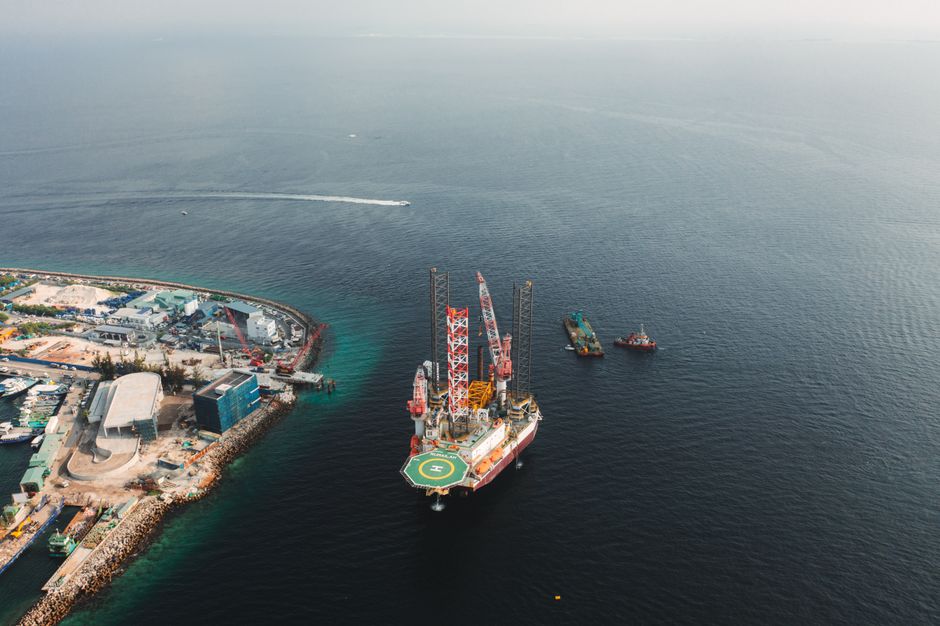
The molecule monetization stops at the terminal fence — the tanker leg belongs to global shipowners in Greece, Japan, and Korea, not a protected U.S. fleet that was never built because none was ever mandated.
Who cashes in: The money stays onshore, concentrated in the assets that get gas to the water, not across it.
- LNG (Cheniere Energy) — the clearest winner, but only up to the loading arm. Cheniere's model is liquefaction-and-marketing: it buys U.S. gas, tolls it through Sabine Pass and Corpus Christi trains, and sells cargoes FOB or delivered via chartered (foreign-flagged) carriers. Every dollar of margin is captured in the liquefaction fee and marketing spread — none of it needs a U.S. shipping arm, and none is at risk from Jones Act carrier scarcity.
- KMI (Kinder Morgan) — feeds roughly 40% of the natural gas consumed by U.S. LNG terminals through its pipeline network, with long-term contracts moving gas straight to liquefaction facilities. It profits on throughput fees regardless of who owns the ship that eventually carries the LNG offshore.
- WMB (Williams) — same structural bet: gathering and interstate pipeline capacity feeding Gulf Coast export terminals earns fixed, volume-based tolling revenue that is fully insulated from the maritime leg.
Who is exposed: No major LNG-adjacent name is "hurt" by this dynamic in an earnings sense, but the framing matters for expectation-setting. Investors who bid up LNG or infrastructure names on a thesis that a domestic-shipbuilding or U.S.-flag-carrier boom is coming alongside the export boom are exposed to a narrative that has no legal mechanism behind it. There is no protected shipping toll to capture, so any speculative basket built around a "Jones Act LNG fleet build-out" — small-cap shipyards, proposed U.S.-flag LNG carrier JVs — is exposed to indefinite delay, since nothing in the export trade compels the fleet to exist.
The play: Value the export chain where the law actually creates scarcity — pipeline capacity and liquefaction slots (KMI, WMB, LNG) — not the tanker leg, which is a globally competitive, foreign-flagged market with no U.S. toll booth. Watch DOE export-authorization pace and FERC terminal approvals, not Jones Act carrier headlines, for the real catalyst.
Source: original report ↗
Free: catalyst alerts, straight to your inbox.
Get the White House orders, federal contracts, and FDA decisions that move money — with who cashes in — free. Unsubscribe in one click.
Free · weekly · unsubscribe anytime. Privacy.
Stay three moves ahead of every practice in your market.
Knowing it happened is table stakes. Money Racket Pro hands you the play — what each move means for your margins, your license, and your patients, and exactly what to do about it — in a two-minute brief, twice a week. The owners who read it never get blindsided.
Get the edge · $40/moJoin the owners who run ahead of the industry. Cancel anytime, one click.