
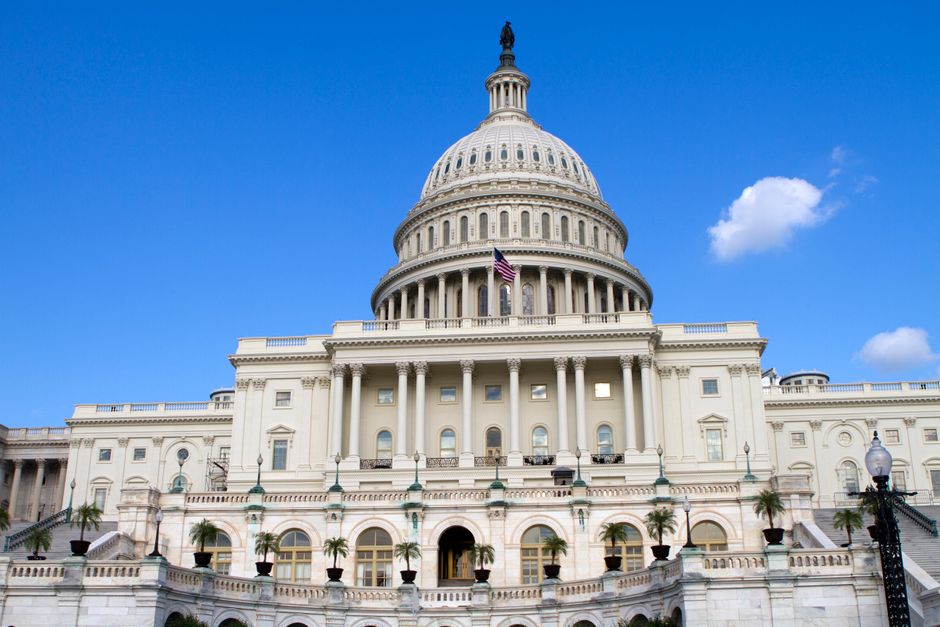
Every few years, Congress fails to pass appropriations bills or a continuing resolution, and the federal government "shuts down." Cable news covers it like a natural disaster — furloughed workers, shuttered national parks, canceled flights. For investors, the more useful framing is narrower and more mechanical: a shutdown is a temporary interruption in the processing of federal payments, not a repeal of the government's underlying obligations. Contracts already signed still exist. Debt already owed still accrues. Backlogs that pile up during the closure still have to get worked off afterward, usually at a premium.
This is why shutdowns are one of the most tradeable, recurring pieces of policy theater in Washington. They happen on a predictable calendar (funding deadlines are public), they follow a predictable structure (some agencies stay open, some don't, essential functions never stop), and the aftermath is predictable too (back pay, catch-up spending, and a bill for the disruption). The companies that benefit aren't mysterious — they're the ones with contract structures that survive a lapse in appropriations, or business models that profit from the chaos a lapse creates.
This guide is a durable reference for how to think about that mechanism: which sectors are structurally shutdown-resistant or shutdown-beneficiary, which real tickers sit in those sectors, and how to track a shutdown's progress using public, non-partisan sources so you're not trading on cable-news vibes.
The mechanism: why a funding lapse doesn't stop the money
A government shutdown happens when Congress hasn't passed appropriations bills or a continuing resolution (CR) by the start of a fiscal year or the expiration of the prior CR. Under the Antideficiency Act, agencies without appropriated funds must furlough non-essential staff and pause new discretionary obligations. But three huge categories of federal spending are explicitly exempt or effectively untouched: mandatory spending (Social Security, Medicare, Medicaid benefits keep flowing because they're funded by permanent law, not annual appropriations), debt service (Treasury must keep paying interest on U.S. debt or trigger a default, which is a separate and far scarier event), and "excepted" activities tied to safety of life and property (active-duty military, air traffic control, federal law enforcement, border security all keep working, just unpaid until it's over).
The practical upshot: contracts that were already funded and obligated before the lapse generally continue to be performed and paid, because the government already committed the money — the shutdown freezes new obligations and non-essential civilian payroll, not the servicing of prior commitments. Defense and intelligence contracts in particular are often funded via multi-year or advance appropriations specifically so the Pentagon doesn't grind to a halt every time Congress fights over a CR. That structural detail is the whole playbook: find where the money was already locked in before the fight started.
Who cashes in #1: Defense primes with advance-funded, multi-year contracts
Large defense contractors — Lockheed Martin (LMT), RTX Corporation (RTX), Northrop Grumman (NOC), General Dynamics (GD), L3Harris (LHX) — sit on backlogs funded through multi-year procurement and advance appropriations specifically designed to survive annual budget fights. Congress has historically prioritized passing a Defense appropriations bill or a defense-specific CR precisely because interrupting weapons-program payments and military paychecks is politically toxic and operationally dangerous, so DoD is frequently the last agency to actually feel a lapse, and often keeps paying contractors on already-obligated work throughout.
The mechanism isn't "war is good for stocks" — it's narrower: these companies have multi-year backlogs (Lockheed's F-35 program alone runs years ahead), so a 2-4 week civilian shutdown barely dents revenue recognition, while the market narrative ("government shutdown, sell everything government-related") can create a mispriced dip in names that were never actually at risk. Readers should distinguish backlog-insulated primes from smaller subcontractors and services firms more dependent on new contract awards, which do pause during a lapse and see award timelines slip.
Who cashes in #2: The catch-up trade — IT services and staffing after reopening
Every shutdown creates a backlog: unprocessed passport applications, paused IRS refund processing, delayed permit reviews, stalled contract awards. When the government reopens, that backlog has to be worked off fast, and agencies lean on the same government-services contractors they always use — Booz Allen Hamilton (BAH), Leidos (LDOS), SAIC (SAIC), ManTech-style IT integrators, and staffing firms like ICF International (ICFI) — often via task orders on existing IDIQ (indefinite delivery/indefinite quantity) contract vehicles, which don't require new competitive procurement and can be issued quickly.
The pattern to watch is a lull-then-surge: these stocks can drift or dip during the shutdown itself (new contract awards freeze, so near-term revenue visibility looks murky), then see a bookings and revenue bump in the following one to two quarters as agencies process the backlog and award deferred task orders. This is a post-shutdown trade more than a during-shutdown one — the entry point is often the shutdown itself, when the stocks are cheap on temporary uncertainty, and the payoff shows up in subsequent earnings calls that reference "catch-up work" or "backlog conversion."
The exposed side: travel, tourism-adjacent, and small federal contractors
Shutdowns aren't universally bullish for government-adjacent names — some are directly exposed. Airlines (Delta (DAL), United (UAL), American (AAL)) face real friction when TSA and air traffic controllers work unpaid: prior shutdowns have produced rising controller call-outs and TSA staffing shortages that caused flight delays and, in the 2019 shutdown, contributed to pressure that helped end it. Companies exposed to national parks and federal land tourism, and hospitality names in gateway towns near parks, see bookings soften when parks close or run with skeleton staff.
Smaller, less-diversified federal contractors and small businesses dependent on Small Business Administration loan processing or new federal contract awards (rather than existing backlog) are also exposed — SBA can't approve new loans during a lapse, and small-cap government-services names without big backlogs feel a cash-flow pinch civilian-side that the primes with years of backlog simply don't. The general rule: the further a company's revenue depends on new federal decisions being made during the lapse (new loans, new permits, new contract awards) rather than existing obligations being paid out, the more exposed it is.
The credit-rating wildcard: prolonged shutdowns and debt-ceiling collision
A garden-variety appropriations shutdown is a nuisance; it becomes a market event when it drags long enough to bleed into consumer confidence, delay economic data the Federal Reserve relies on (a shutdown pauses BLS jobs reports and other releases, which can leave the Fed and markets flying partially blind on rate decisions), or collides with a separate debt-ceiling deadline. Ratings agencies (Moody's, S&P, Fitch) have flagged repeated fiscal brinkmanship as a factor in U.S. sovereign credit outlook commentary, and a shutdown that overlaps with a debt-ceiling standoff is a materially different, more dangerous animal than one that doesn't — the former is a spending-authorization fight, the latter risks an actual default on Treasury obligations.
Investors should track shutdown length and proximity to any debt-ceiling deadline as the key variable for whether this stays a sector-rotation story (defense/services up, travel down) or becomes a broader risk-off event that hits Treasuries, the dollar, and equities generally. The Congressional Budget Office and Treasury both publish debt-ceiling "X-date" estimates publicly — that date, not the shutdown itself, is usually the one that actually moves broad markets.
How to spot and track it: the public paper trail
None of this requires insider access. The federal fiscal year starts October 1, and funding deadlines (the CR expiration date) are public knowledge months in advance — Congress.gov and the House/Senate Appropriations Committee sites publish the status of every appropriations bill in real time. The Office of Management and Budget (OMB) maintains public shutdown contingency plans for every major agency, which spell out in advance exactly which functions are "excepted" (keep running) versus furloughed — reading an agency's own contingency plan tells you precisely who gets paid during a lapse before it even happens.
During an active shutdown, USAspending.gov shows real obligation and outlay data so you can verify whether a given contractor's payments are actually flowing or paused, and SEC filings (10-Qs, 8-Ks) from the contractors themselves often disclose shutdown-related revenue impact in the following quarter's MD&A section. For the backlog-conversion trade, watch contractor earnings-call transcripts in the one to two quarters after reopening for management language about "catch-up," "backlog conversion," or "deferred task orders" — that's the tell that the post-shutdown bump is materializing rather than just hoped-for.
Bottom line
A shutdown doesn't freeze the economy — it freezes federal cash flow, and the companies that get paid regardless (or get paid extra to clean up the mess afterward) are knowable in advance: defense primes with advance-funded contracts, IT/staffing firms that ride the backlog surge, and essential-service monopolies immune to the politics entirely. Track the calendar, read the CR fine print, and buy the backlog, not the headline.