
The Consumer Financial Protection Bureau's authority over credit card late fees is one of the most direct levers Washington has over bank revenue. Under the Credit Card Accountability Responsibility and Disclosure Act, the CFPB sets the "safe harbor" ceiling on what issuers can charge a cardholder who pays late. The Biden-era CFPB moved to slash that ceiling to $8 per incident — down from the $30–$41 range that had been standard. The rule was blocked in federal court and then deprioritized under the Trump administration's CFPB pullback. The mechanism is straightforward: every dollar of cap headroom restored is a dollar that the nation's two largest card issuers can flow back onto the income statement.
Finance
The CFPB Dial: How the Credit Card Late-Fee Rule Reshapes the Issuing Bank Revenue Stack
When Washington turns the CFPB dial on credit card late fees, JPMorgan and Bank of America feel it directly in the income statement — and a deregulatory reversal is worth hundreds of millions per year.
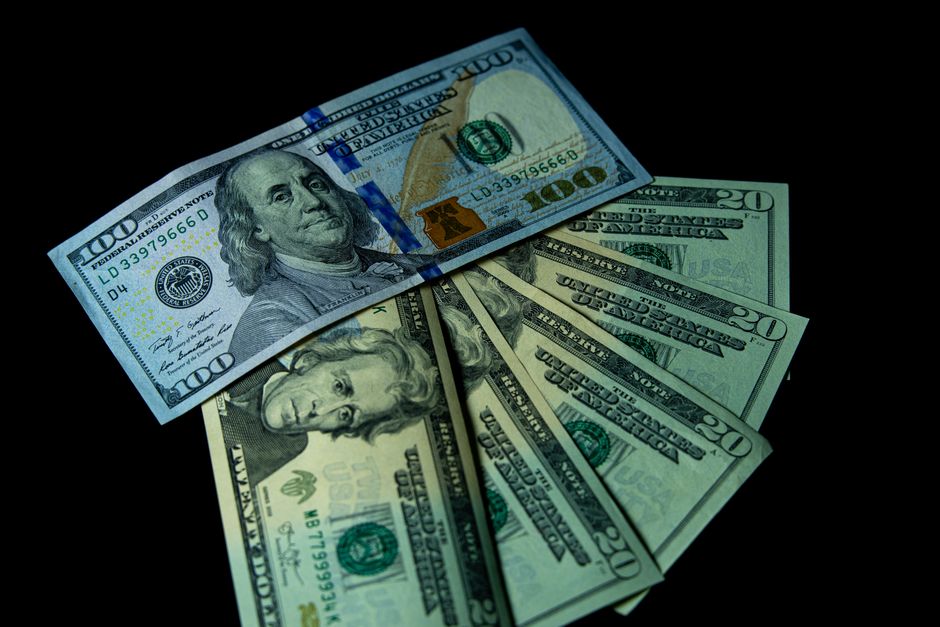
Every dollar of cap headroom restored is a dollar that the nation's two largest card issuers can flow back onto the income statement — with essentially zero marginal cost.
Who Cashes In
JPM — JPMorgan Chase runs the largest U.S. credit card portfolio by outstandings, with tens of millions of active accounts. Late fees are a recurring, high-margin revenue line inside its card services segment. A restored or expanded safe harbor means JPM collects more per delinquent event with essentially zero marginal cost — it is pure fee income on an existing infrastructure.
BAC — Bank of America is the second-largest card issuer and carries a similar dynamic. Its consumer banking segment relies on card fee income to offset net interest compression in flat-rate environments. A deregulatory CFPB stance that lets the $30+ safe harbor stand is a quiet earnings tailwind that shows up in non-interest income.
V and MA — Visa and Mastercard do not directly collect late fees — those go to the issuing bank — but issuer profitability drives portfolio growth and card volume. When issuers earn more per account, they compete harder for new cardholders and push more spend through the rails. Higher card penetration is a long-cycle volume tailwind for both networks.
Who Is Exposed
GS — Goldman Sachs built its Marcus consumer card operation (the Apple Card partnership) as a fee-light, consumer-friendly product. That positioning made sense under a cap environment where fee income was constrained for everyone. But if legacy issuers restore late-fee revenue and use it to fund richer rewards and lower rates, Goldman faces a more competitive consumer card market with a thinner product margin to defend it.
What to Watch
Track the CFPB's regulatory agenda page and any Fifth Circuit or Supreme Court action touching the original Biden-era $8 cap litigation. If the rule is formally vacated rather than merely unenforced, JPM and BAC management will almost certainly reference the revenue impact in the following quarterly card segment disclosure. The number will not be buried — it will appear in non-interest income, and it will be large.
Source: original report ↗
Free alerts
Free: catalyst alerts, straight to your inbox.
Get the White House orders, federal contracts, and FDA decisions that move money — with who cashes in — free. Unsubscribe in one click.
Free · weekly · unsubscribe anytime. Privacy.
Stay three moves ahead of every practice in your market.
Knowing it happened is table stakes. Money Racket Pro hands you the play — what each move means for your margins, your license, and your patients, and exactly what to do about it — in a two-minute brief, twice a week. The owners who read it never get blindsided.
Get the edge · $40/moJoin the owners who run ahead of the industry. Cancel anytime, one click.