
NATO's 2-percent-of-GDP defense spending pledge has been a political football for years, but the arithmetic underneath it is straightforward: when allied governments actually open their wallets, they are constrained by interoperability. NATO doctrine requires that new platforms talk to existing NATO command, communications, and weapons architecture — architecture that is overwhelmingly American-built. That structural lock-in routes fresh European and Pacific spending back through the U.S. Foreign Military Sales pipeline, and a handful of American primes sit at the receiving end of that pipe.
Defense
NATO's 2% Mandate Is a Revenue Stream Disguised as an Alliance Obligation
When European and Asian NATO partners hit their GDP spending targets, the purchase orders land disproportionately on American primes selling interoperable systems through Foreign Military Sales.
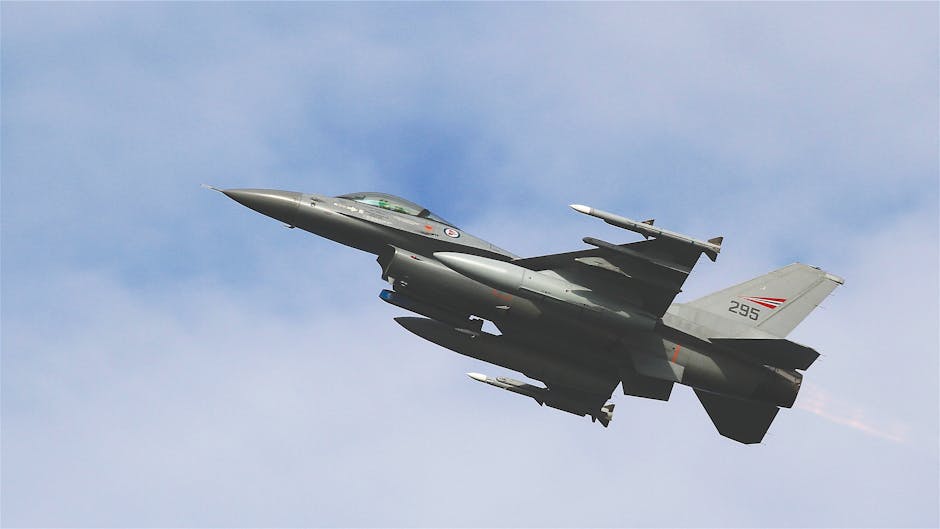
NATO doctrine requires that new platforms talk to existing NATO command and weapons architecture — architecture that is overwhelmingly American-built. That structural lock-in routes fresh European spending back through the U.S. Foreign Military Sales pipeline.
Who cashes in
LMT is the clearest beneficiary. The F-35 is the default fifth-generation fighter for NATO members modernizing their air forces — Belgium, the Netherlands, Denmark, Finland, and Poland are already contracted buyers, and several more are in advanced discussions. Each additional airframe purchase expands Lockheed's production backlog and triggers decades of maintenance, upgrades, and sustainment revenue. The company's aeronautics segment is structurally leveraged to allied spend in a way no other prime matches.
RTX captures the air-defense and missile layer. As NATO allies plug holes in ground-based air defense — accelerated by the war in Ukraine demonstrating how quickly modern air threats consume inventory — Patriot batteries, NASAMS components (which RTX co-produces), and AIM-120 AMRAAM missiles move through FMS channels. RTX's Raytheon segment books both the original sale and the munitions replenishment contracts that follow.
GD owns the land-warfare corridor. The M1A2 Abrams is the NATO standard main battle tank, and Poland alone has ordered over 1,000 hulls across multiple tranches. General Dynamics Land Systems collects the prime contract revenue, and the ripple extends to GD's European Land Systems subsidiary, which handles final assembly and sustainment in-region.
LHX benefits from the communications and electronic-warfare spending that accompanies every platform purchase. Radios, electronic countermeasures, and ISR systems must be NATO-interoperable, and L3Harris holds dominant positions in battlefield communications that scale with allied headcount.
Who is exposed
BA is the exception among the majors. Its defense segment remains burdened by fixed-price development contract losses and unresolved production issues on legacy programs. While it participates in some FMS rotary-wing sales (CH-47, AH-64), it is not positioned to capture the primary combat-aviation uplift the way LMT is, and investors should not assume it rides the same NATO tailwind.
AVAV and KTOS are domestically oriented drone and strike programs. NATO interoperability requirements favor larger integrated platforms; smaller unmanned systems suppliers face a longer path to FMS qualification and allied procurement cycles.
What to watch
Track the State Department's annual FMS sales report and congressional notifications of major defense sales through the Defense Security Cooperation Agency (DSCA). When a new allied government announces a defense budget increase or a specific platform commitment, the FMS notification — posted publicly — names the prime contractor and the dollar ceiling. That is the signal, not the political headline.
Source: original report ↗
Free alerts
Free: catalyst alerts, straight to your inbox.
Get the White House orders, federal contracts, and FDA decisions that move money — with who cashes in — free. Unsubscribe in one click.
Free · weekly · unsubscribe anytime. Privacy.
Stay three moves ahead of every practice in your market.
Knowing it happened is table stakes. Money Racket Pro hands you the play — what each move means for your margins, your license, and your patients, and exactly what to do about it — in a two-minute brief, twice a week. The owners who read it never get blindsided.
Get the edge · $40/moJoin the owners who run ahead of the industry. Cancel anytime, one click.