
Thursday, July 2, 2026 See who Washington just made rich Go Pro · $40/mo →
Money Racket
Who Cashes In When Washington Moves
DEFENSEThe F-35 Sustainment Lock-In: Why the Pentagon's Most Expensive Program Keeps Paying One Company ForevertodayHEALTHCARE340B Under Fire: The Hospital Drug Discount Fight That Hits CVS and HCA Where It Hurts4 weeks agoTRADE & TARIFFSThe Tariff Refund Portal Is Open and Companies Are Cashing In — Nike and FedEx Are the Names to WatchyesterdayHEALTHCAREGLP-1 Coverage Mandate: The Federal Obesity Drug Windfall for Lilly and Novo4 weeks agoMARKETSSupreme Court Gives Trump FTC Firing Power — Antitrust Enforcement Just Got More PoliticalyesterdayHEALTHCAREFDA Accelerated Approval Reform: The Vertex Model Every Biotech Wants4 weeks agoTRADE & TARIFFSTrump's Fertilizer Tariff Suspension Cuts Input Costs for Farmers — and Squeezes Domestic ProducersyesterdayHEALTHCAREThe Medicare Drug Negotiation Trade: Who Gets Hurt When Washington Sets the Price4 weeks agoDEFENSEThe Nuclear Triad Upgrade Cycle: Three Legs, Three Winners, Decades of Locked-In SpendingyesterdayCRYPTOThe Anti-CBDC Play: No Digital Dollar Means Private Rails Win4 weeks agoDEFENSEWhen the Pentagon Classifies a Budget Line: The Black Budget Trade2 days agoCRYPTOThe Toll Booth at the Top of the Bitcoin ETF Stack4 weeks agoDEFENSENATO's 2% Mandate Is a Revenue Stream Disguised as an Alliance Obligation3 days agoCRYPTOThe IRS Closes the Crypto Wash-Sale Loophole — and Robinhood Collects the Toll4 weeks agoDEFENSEThe Drone Proliferation Trade: Washington's Shift to Attritable Unmanned Systems Creates a Recurring Revenue Stream3 days agoCRYPTOThe Debanking Era Is Over. HOOD and Block Are Next in Line at the Window.4 weeks agoDEFENSEThe Hypersonic Arms Race Has a Bottleneck — and Three Contractors Own It4 days agoCRYPTOMining the Grid: How EPA and Energy Policy Set the Spread for Proof-of-Work Miners3 weeks agoDEFENSEThe Pentagon's AI Mandate: Why Defense Data Platforms Are Now a Weapons Program5 days agoCRYPTOThe Stablecoin Bill: Who Controls the On-Ramp When Congress Licenses It3 weeks agoDEFENSEIron Dome and the FMS Pipeline: How Middle East Tensions Fund Missile Defense Primes5 days agoCRYPTOBitcoin as Reserve Asset: The Federal Legitimacy Trade3 weeks agoENERGYThe SPR Refill Trade: Who Gets Paid When Washington Buys Oil6 days agoCRYPTOThe SEC Retreat: How a Friendlier Regulator Unlocks Coinbase's Business Model3 weeks agoENERGYLNG Export Licenses: How a FERC Approval Mints a Monopolylast weekTECHThe Federal Data Center Mandate: How Washington's AI Spending Flows to Hardware3 weeks agoENERGYThe BLM Calendar That Moves COP and OXYlast weekTECHThe Domestic Equipment Play: How Foreign Chip Tool Restrictions Hand Applied Materials a Structural Edge3 weeks agoENERGYThe Permian Methane Rule: Why Stricter EPA Standards Are a HAL and SLB Giftlast weekTECHThe AI Diffusion Rule Is Picking Winners Inside the Chip Stack — and It Is Not Who You Think3 weeks agoENERGYThe Permit Logjam Is Breaking: Williams and Kinder Morgan Hold the Keyslast weekTECHThe HBM Monopoly: How Federal Memory Standards Lock In Micron3 weeks agoENERGYThe Tax Code Oil Patch: Who Gets Crushed If Washington Kills the IDC Deductionlast weekTECHThe Tariff Arbitrage: How Chip Import Duties Reshape the Foundry Map3 weeks agoENERGYThe Pipe Tax: How Section 232 Steel Tariffs Rewire U.S. Drilling Economicslast weekTECHThe Chip Stack Below the Pentagon's AI Buildup3 weeks agoENERGYSanctions Relief and the LNG Arbitrage: When State Department Decisions Move the Henry Hublast weekTECHThe CHIPS Act Subsidy Ladder: Who Actually Receives the $39 Billion3 weeks agoENERGYThe Nuclear Production Tax Credit Trade: Who Gets Paid to Keep Old Reactors Alivelast weekENERGYThe Grid Hardening Bill Trade: How Federal Transmission Investment Lifts the Equipment Makers2 weeks agoENERGYThe Uranium Supply Squeeze: How the Russian Import Ban Flows to Cameco and Centruslast weekTECHThe Export Control Squeeze: BIS Chip Rules Are Splitting the AI Hardware Market in Two2 weeks agoENERGYThe SMR Funding Funnel: How DOE's Loan Billions Flow to Small Modular Reactorslast weekENERGYThe Only U.S. HALEU Cascade: How Centrus Became the Gatekeeper to the Advanced Reactor Boom2 weeks agoENERGYWashington Plugs AI Into Reactors: The Behind-the-Meter Nuclear Offtake Trade2 weeks agoENERGYThe Grid Reliability Mandate: FERC's Capacity Market Rules Are Writing Checks to Nuclear2 weeks agoENERGYThe Nuclear Restart Order: Only One Operator Has Actually Flipped the Switch2 weeks ago
That's your last free article this week. Create a free account for 4 a week — or go Pro for everything.Go Pro →
Tech

The Chip Stack Below the Pentagon's AI Buildup

Every dollar the DoD spends on AI-first warfighting flows downhill through cloud primes and lands on Nvidia GPUs and Broadcom custom silicon — whether the Pentagon knows it or not.

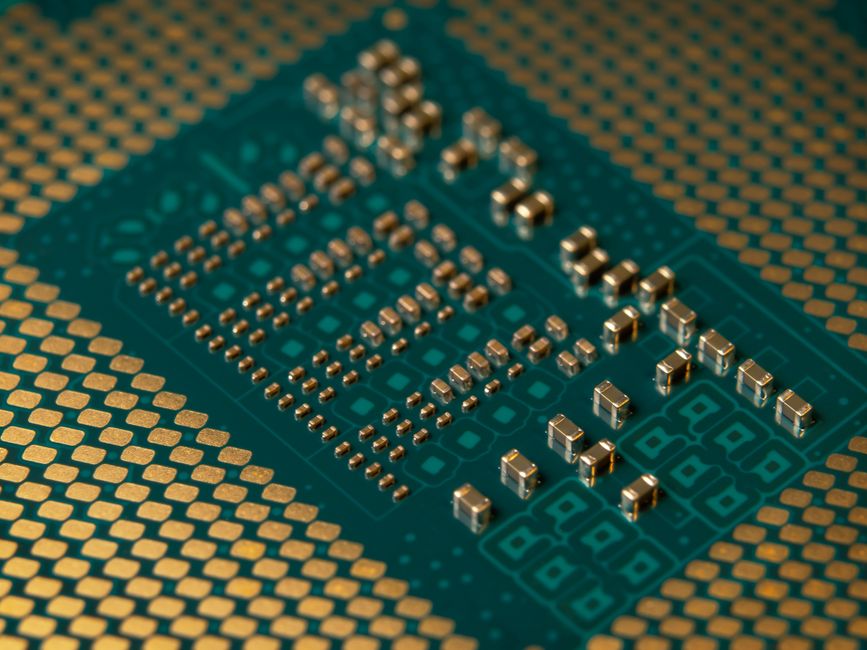
Image: Money Racket

The Chip Stack Below the Pentagon's AI Buildup

Washington's latest AI directive is not a rhetorical gesture. On June 30, 2026, President Trump signed NSPM-11, a National Security Presidential Memorandum that formally defines the U.S. "AI technology stack" — chips, servers, accelerators, data center storage, networking — as a national security asset and orders the defense establishment to accelerate AI adoption across classified and unclassified networks alike. That same memorandum directs the Secretaries of War and Energy and the NSA Director to stand up private-sector partnerships to harden AI infrastructure within 120 days. The FY2026 NDAA layered on statutory mandates requiring DoD to assess AI investments annually and modernize high-performance compute data centers on military installations.

Every inference cluster those companies run for the Pentagon requires Broadcom's custom networking silicon to function at scale — defense AI adoption converts commercial cloud capacity into government workloads.

The money follows the policy. In May 2026, the Pentagon announced direct agreements with Nvidia, Microsoft, AWS, Alphabet, OpenAI, SpaceX, and others to deploy AI on classified networks via GenAI.mil, its official AI platform. Separately, CDAO awarded up to $200 million each to four frontier AI model vendors. And the $9 billion Joint Warfighting Cloud Capability (JWCC) program — with JWCC Next solicitation targeted for early 2027 — is the pipe through which AI inference workloads run. The compute layer beneath all of this is not abstracted away. It is very specific hardware.

Who Cashes In

NVDA is the structural winner. Every hyperscale and government cloud cluster running AI inference or training on classified networks is overwhelmingly GPU-dependent, and NVIDIA's H100, H200, and now Blackwell architecture are the default. The Pentagon's direct agreement with Nvidia in May 2026 is a signal, not an exception — the DoD is now a named end-customer, not just a downstream beneficiary.

AVGO benefits through a different but equally durable mechanism. Broadcom's custom ASIC (XPU) business serves Google, Meta, and now OpenAI — all of which are JWCC/GenAI.mil vendors deploying into DoD environments. Every inference cluster those companies run for the Pentagon requires Broadcom's custom networking silicon (Tomahawk switching, Jericho routing) to function at scale. AVGO's $73 billion AI revenue backlog is a commercial-first story, but defense AI adoption converts commercial cloud capacity into government workloads.

MU is the third-order play. AI inference at classified-network scale is memory-bound. High-bandwidth memory (HBM) and DDR5 content per server rises with each new GPU generation, and Micron is one of two companies supplying HBM at volume alongside SK Hynix. A sustained DoD AI compute buildout is a structural HBM demand signal.

Who Is Exposed

INTC faces the wrong architecture at the wrong moment. Intel's GPU (Gaudi) and data center products have failed to take meaningful share in the AI accelerator market, and the NDAA's mandates around AI compute infrastructure play directly to GPU- and custom-ASIC-first architectures where Intel is structurally behind. More risk: any further budget scrutiny on legacy Pentagon IT — where Intel server CPUs dominate — could compress Intel's defense footprint without a replacement revenue stream.

AMD is in an awkward middle. Its MI300X GPU is competitive on paper but has not secured the hyperscale or government-cloud adoption needed to become a named partner in DoD AI programs. AMD benefits marginally from any GPU demand expansion but is not a structural winner of this particular policy cycle.

The Play

Watch the JWCC Next solicitation (expected early 2027) and any DoD data center energy and capacity disclosures required under the FY2026 NDAA's Section 1531. Those documents will name the compute infrastructure standards DoD expects vendors to meet — and whatever architecture dominates that language is the chip stack that gets built out at scale. NVDA is already inside the perimeter. AVGO wins every time the cloud vendors it supplies win government task orders.

Source: original report ↗

Free alerts

Free: catalyst alerts, straight to your inbox.

Get the White House orders, federal contracts, and FDA decisions that move money — with who cashes in — free. Unsubscribe in one click.

Free · weekly · unsubscribe anytime. Privacy.

Stay three moves ahead of every practice in your market.

Knowing it happened is table stakes. Money Racket Pro hands you the play — what each move means for your margins, your license, and your patients, and exactly what to do about it — in a two-minute brief, twice a week. The owners who read it never get blindsided.

Get the edge · $40/mo

Join the owners who run ahead of the industry. Cancel anytime, one click.

Discussion

    Leave a comment

    Comments are reviewed before they appear.
    Money Racket Pro

    By the time it's news, the money's already moved.

    The contract award, the executive order, the tariff cut — it mints winners before the financial press connects the dots. Pro gets you there first: what happened, who cashes in, and exactly what to watch — in a two-minute read.

    Go Pro · $40/mo The policy-to-profit brief. Cancel anytime.
    The pre-market brief · Mon–Sat, 7:45am ET Go Pro · $40/mo