
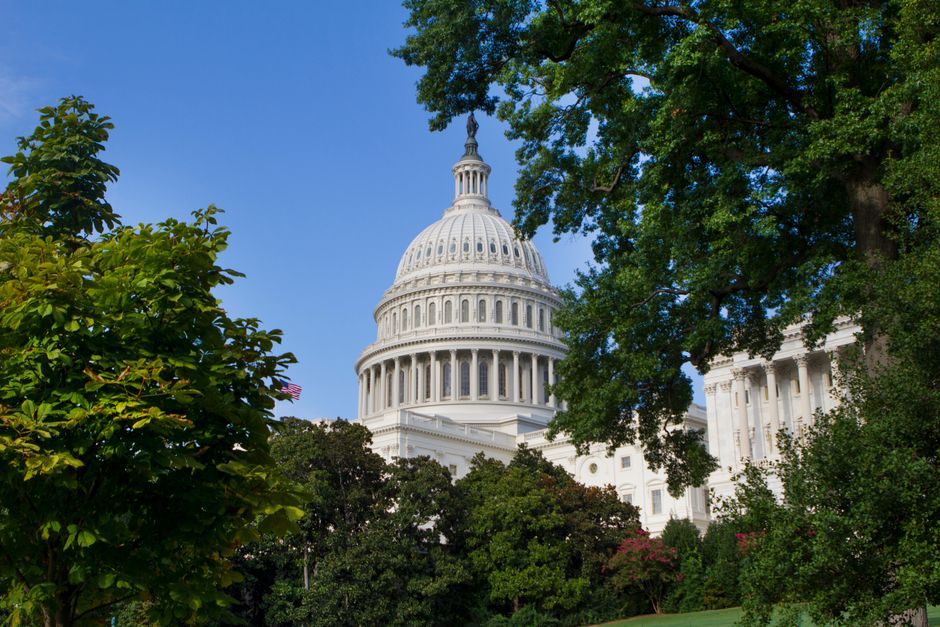
A government shutdown is not a random act of chaos. It is a recurring, mechanical event with a well-worn script: Congress fails to pass a continuing resolution or appropriations bill, the Treasury stops disbursing non-essential funds, federal workers go home, and certain corners of the economy feel it immediately while others quietly benefit. The market has lived through this enough times to have a playbook, and that playbook rewards the investor who runs it before the cable news countdown clock lights up.
The core mechanism is cash-flow disruption. When the government stops spending, it does not stop owing. Contracts pause, not cancel. Benefit checks owe back pay. IRS audits halt, FDA decisions freeze, defense programs continue under existing authority. What changes is timing — and timing creates price dislocations in specific sectors that resolve predictably when the shutdown ends, which it always does.
This guide is a durable reference for that recurring trade. It covers which sectors get hit, which get a quiet tailwind, how to track the signals Washington emits before a shutdown lands, and how to position without treating an uncertain political timeline as a certainty. None of this is personalized advice — it is a map of the machinery.
How a Shutdown Works: The Policy-to-Market Mechanism
A shutdown begins at midnight when a fiscal year ends or a continuing resolution expires without a replacement. The Office of Management and Budget (OMB) issues a shutdown order, and agencies execute pre-filed contingency plans that distinguish "essential" functions (military, air traffic control, emergency services, border security) from "non-essential" ones (new permit processing, IRS refunds, FDA non-emergency reviews, national parks). Essential functions continue; the rest stop.
The market mechanism is a combination of delayed revenue and a flight-to-safety reflex. Defense contractors with cost-plus contracts keep billing under existing program authority — the DoD can obligate funds from prior authorizations. But agencies that issue new contracts, process loan guarantees, or publish regulatory decisions go dark. That delay compresses into a catch-up burst on re-opening. The investor who understands which sectors are insulated versus deferred versus genuinely impaired has a structural edge.
The timeline also matters. Shutdowns under two weeks have historically produced minimal lasting market impact and are often bought on day one. Shutdowns extending past three to four weeks begin to generate real economic drag — back-pay accrues, small businesses relying on SBA loan approvals stall, and consumer sentiment in federal-worker-dense metro areas softens. Monitoring the Congressional calendar and the White House budget office posture is the first tactical step.
The Clear Winners: Defense and Essential-Services Contractors
Defense is the textbook shutdown-insulated sector. Programs funded under prior-year authorizations — think major weapons systems, Navy shipbuilding, satellite programs — continue. Contractors with large cost-plus backlogs keep recognizing revenue. Companies like Lockheed Martin (LMT), Northrop Grumman (NOC), Raytheon Technologies (RTX, now RTX after the merger), General Dynamics (GD), and L3Harris Technologies (LHX) carry years of contract backlog that does not require new agency disbursements during a short shutdown. Their program officers are essential personnel; they stay at their desks.
Border security and law enforcement are similarly insulated. Customs and Border Protection, TSA, and ICE are funded as essential. Companies providing technology and services to those agencies — SAIC (SAIC), Leidos (LDOS), Booz Allen Hamilton (BAH), and CACI International (CACI) — maintain contract continuity. Booz Allen and Leidos in particular have high percentages of classified and defense-adjacent revenue that flows through DoD appropriations, not discretionary civilian agency budgets.
The practical trade here is not momentum — defense contractors rarely spike on shutdown news. The trade is relative strength and rotation. When utilities and staples sell off on rate noise and tech sells off on risk-off, defense holds or grinds higher. Investors who rotate into LMT or NOC in the days before a continuing-resolution deadline have historically bought into a sector with low shutdown sensitivity and steady backlog visibility.
The Catch-Up Burst: Sectors That Stall and Then Snap Back
FDA drug approvals do not stop during a shutdown — PDUFA (Prescription Drug User Fee Act) deadlines are funded by industry user fees, not appropriations. However, FDA advisory committee meetings, new guidance documents, and certain approval decisions that require active agency staff work slow dramatically. Biotech and specialty pharma companies waiting on PDUFA dates are insulated; companies waiting on discretionary feedback or new drug application interactions face delay. Stocks with imminent binary catalysts can see compression during a shutdown and a sharp re-rating on re-opening. Watch the PDUFA calendar against the shutdown clock.
SBA-backed lending is a cleaner stall-and-snap trade. When the Small Business Administration shuts down, it stops issuing guarantees on 7(a) and 504 loans. Community banks and non-bank lenders — Live Oak Bancshares (LIVB) is the most direct play as the largest SBA 7(a) lender by volume — see loan closings queue up. On day one of re-opening, that queue clears in a burst. Live Oak's revenue recognition is tied closely to SBA guarantee fee income; a multi-week shutdown followed by a clean re-opening creates a pull-forward effect in the next quarter.
Mortgage lending tied to government-backed programs faces a similar dynamic. Ginnie Mae operations can slow during a shutdown, affecting FHA and VA loan processing. Companies with high FHA/VA origination mix — Guild Holdings (GHLD), loanDepot (LDI), and Rocket Companies (RKT) — can see temporary volume pressure with a catch-up tailwind. The trade is not timing the shutdown end to the day; it is buying the overshoot on names where the impairment is temporary and the backlog is real.
The Real Losers: Federal-Dependent Revenue and Consumer Exposure
National park concessionaires are the most direct consumer-facing losers. Delaware North, the concessionaire at Yosemite and other parks, is private. But publicly traded companies with meaningful exposure to outdoor recreation near federal lands — including Vail Resorts (MTN) and ski operators with federal land-use permits — face real operational risk if a shutdown coincides with peak season. Vail operates multiple resorts on Forest Service permits; a shutdown in December or January carries material revenue risk.
Government contractors in civilian agencies face a harder situation than their defense peers. Contractors providing IT services to the IRS, HHS, or the Department of Housing and Urban Development can see work-stop orders within days if the contracting officer determines work must pause. MAXIMUS (MMS), which administers federal health and human services programs, and Conduent (CNDT), which handles government payment processing, have more civilian agency concentration than their defense-heavy peers. These are not crash trades — shutdown risk is priced in as a known recurring event — but they underperform during extended shutdowns.
The most diffuse but real impact is on consumer spending in federal-employee-heavy metros: Washington D.C., Huntsville AL, Colorado Springs CO, and Northern Virginia. Regional banks with heavy exposure to those markets — United Bankshares (UBSI), Cardinal Bankshares (CDBK), and Virginia National Financial (VNAF) — can see delinquency noise in prolonged shutdowns when furloughed employees stretch toward 30 days unpaid. This is a tail risk, not a base case, but it is worth knowing.
The Safe-Haven Playbook: Treasuries, Gold, and Volatility Instruments
A government shutdown is paradoxically bullish for U.S. Treasuries in the short term. Investors buy Treasuries as a risk-off hedge even as the shutdown itself is nominally about the government's inability to fund itself. The reason: a shutdown does not threaten debt service. Interest payments and Social Security disbursements continue under the Antideficiency Act's emergency provisions. What a shutdown does do is soften near-term GDP expectations, which pulls down rate expectations and supports bond prices. The iShares 7-10 Year Treasury Bond ETF (IEF) and the iShares 20+ Year Treasury Bond ETF (TLT) both tend to hold or rally in the first week of a shutdown.
Gold and gold miners exhibit a similar reflex. Political uncertainty and the visual of a dysfunctional federal government push retail and institutional investors toward hard assets. SPDR Gold Shares (GLD) is the most liquid proxy. Among miners, Newmont (NEM) and Barrick Gold (GOLD) have the most index weight and liquidity to absorb rotation. The move tends to be modest — one to three percent over a one-to-two-week shutdown — but consistent. It reverses sharply when a deal is announced, so this is a trade to enter early and exit before resolution.
The CBOE Volatility Index (VIX) reliably spikes heading into a shutdown deadline and then mean-reverts once a deal is in sight. Investors who use volatility as an asset class through iPath Series B S&P 500 VIX Short-Term Futures ETN (VXX) or ProShares VIX Short-Term Futures ETF (VIXY) can capture the spike but face severe decay risk in extended holds. The cleaner expression for most investors is to sell covered calls on holdings heading into a deadline — collecting premium from elevated implied volatility rather than trying to ride VIX products.
The Tracking Dashboard: Signals to Watch Before and During a Shutdown
The first signal is the Congressional Budget Office's budget outlook and the White House OMB's passback memo, both public documents. When OMB issues agency shutdown contingency plan review notices — which agencies are required to update annually — it is a leading indicator that leadership is not fully confident in a clean resolution. These documents appear on agency websites and are rarely covered until a shutdown is days away.
The second signal is the gap between what the House and Senate have passed and what the White House will sign. Track the vote tallies on continuing resolutions in the Congressional Record. A CR that passes with narrow margins or significant defections signals a fragile consensus. A CR that fails cloture in the Senate is the practical starting gun — budget roughly 48 to 72 hours to a shutdown at that point.
For sector-level tracking, watch the SPDR S&P Aerospace & Defense ETF (XAR) and the iShares U.S. Aerospace & Defense ETF (ITA) for relative performance versus the S&P 500 (SPY). Outperformance of XAR or ITA against SPY in the week before a deadline is a market-implied signal that professional money is rotating into shutdown-insulated exposure. The inverse — biotech ETFs like iShares Biotechnology ETF (IBB) or SPDR S&P Biotech ETF (XBI) lagging — signals the market pricing in approval-pipeline delays. These ETF relative-strength divergences are the cleanest real-time monitor available to a retail investor without a Bloomberg terminal.
Sizing and Timing: How Not to Over-Trade a Political Wildcard
The core risk in the government shutdown trade is the unpredictability of the resolution timeline. Markets have been burned by last-minute deals that arrive at 11:59 PM on shutdown eve and by shutdowns that were supposed to last days and stretched into weeks. Position sizing should reflect that uncertainty: this is an overlay trade, not a concentration bet. Rotating five to ten percent of a portfolio into shutdown-insulated sectors in the two weeks before a high-risk deadline is a reasonable expression. Doubling down on VIX products or inverse ETFs is speculation on a timeline that politicians control.
The reopening trade is often cleaner than the shutdown entry. When a deal is announced — typically late on a Sunday or in an overnight session — the catch-up sectors (SBA lenders, biotech with delayed decisions, mortgage originators) often gap up at the open and then grind for several sessions as the backlog clears. The shutdown trade is not a one-day event; it has a multi-week tail. Live Oak Bancshares (LIVB) is an example of a stock where the re-opening catalyst is specific, quantifiable (SBA loan pipeline), and often under-followed by generalist money.
Finally, do not ignore the debt-ceiling trade, which is distinct but often conflates with shutdown coverage in financial media. A shutdown is a spending authorization failure; the debt ceiling is a borrowing limit failure. The debt ceiling is categorically more dangerous because it threatens debt service itself. The trades overlap — Treasuries, gold, and defense — but the debt ceiling scenario introduces tail risks (technical default, credit rating downgrade) that do not exist in a standard shutdown. Know which political fight you are actually tracking.
Bottom line
A government shutdown is a recurring, predictable policy event with a consistent market fingerprint: defense and essential-services contractors hold, FDA-calendar biotechs and SBA lenders stall and snap back, Treasuries and gold catch a safe-haven bid, and volatility spikes before mean-reverting. The edge is not predicting when Congress will fold — it is knowing which names move mechanically when they do, and positioning before the countdown clock dominates the front page.